Record when the mark changes
Note whether the patch grows while the home is quiet or only after a shower, sink or appliance runs. A supply line can hold pressure between uses. A drain carries water when something empties. These differences help describe a pattern; they do not confirm a failed part.
Do not run more water simply to reproduce an active leak. A photo taken from a dry, stable position is more useful than opening a wet ceiling to look inside.
Check what is already visible
From a safe, dry position, look at exposed connections below the sink and around nearby fixtures. Water on a pipe can come from a joint, a surface drip above it, or condensation. A dry cabinet at one moment does not clear plumbing concealed beyond it.
If a toilet keeps refilling, mention that separately. Water moving from the tank into the bowl may account for usage without leaving a floor puddle. The EPA describes a tank dye check, but a fixture fault does not prove it caused a nearby wall stain.
A scan is evidence, not a view through the wall
Ask what each proposed check measures and how the result will be confirmed. A temperature pattern can suggest where further moisture checks are needed. It does not confirm water or show a pipe through the wall.
If the wet area follows rain rather than plumbing use, say so at the outset. A roof, window or outside-wall investigation may be more appropriate than a pipe search.
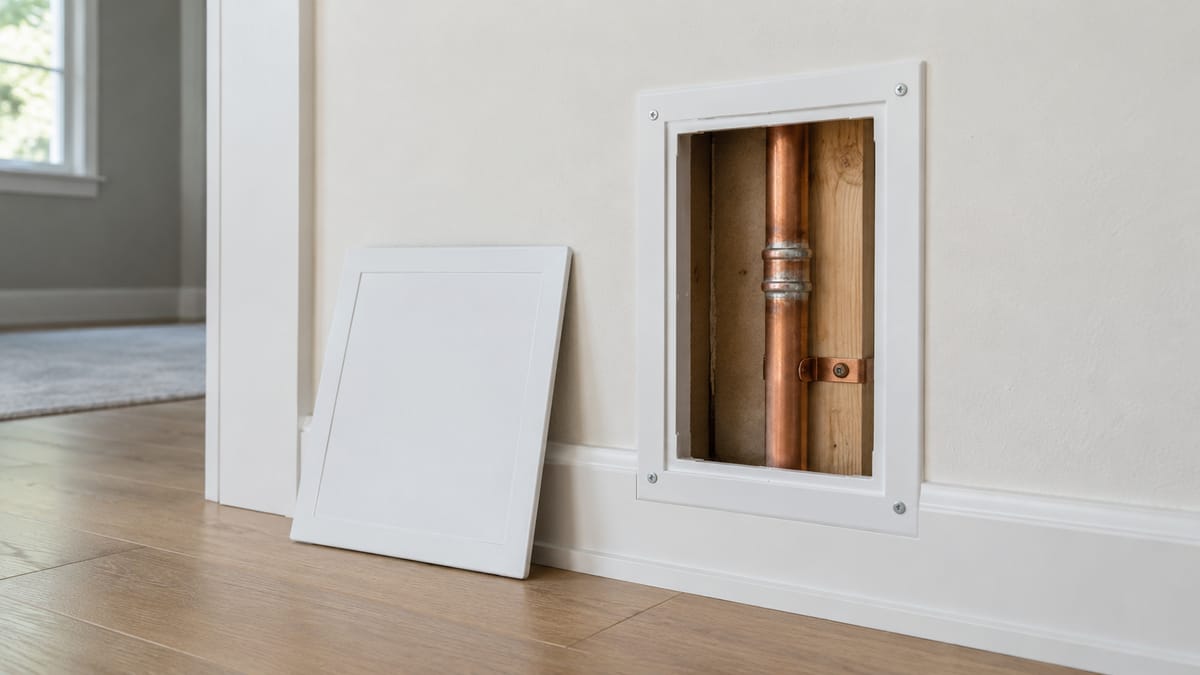
Agree on the opening and the finish
A vanity back, tiled shower wall and painted ceiling create different access decisions. Ask whether the first visit is inspection only, whether an opening needs separate approval, and who will close it after any repair.
For a shared wall or an upstairs unit, notify the owner or manager before authorizing invasive access. Bring any existing repair photos or pipe plans; do not assume the wettest point is directly below the source.
Questions before you book
Should I pierce a bulging ceiling?
Keep people away from it and arrange appropriate help. Do not stand beneath damaged material or work near electrical fittings. A ceiling opening is not a safe remote diagnostic step.
What if the wall is dry when someone arrives?
Save dated photos and the circumstances around each occurrence. An intermittent event can need a different investigation from an active leak. Ask what the visit can conclude if the symptom is absent.
Reference notes
Local boundaries and technical guidance have limits. Check the address and the current requirements with the relevant authority.