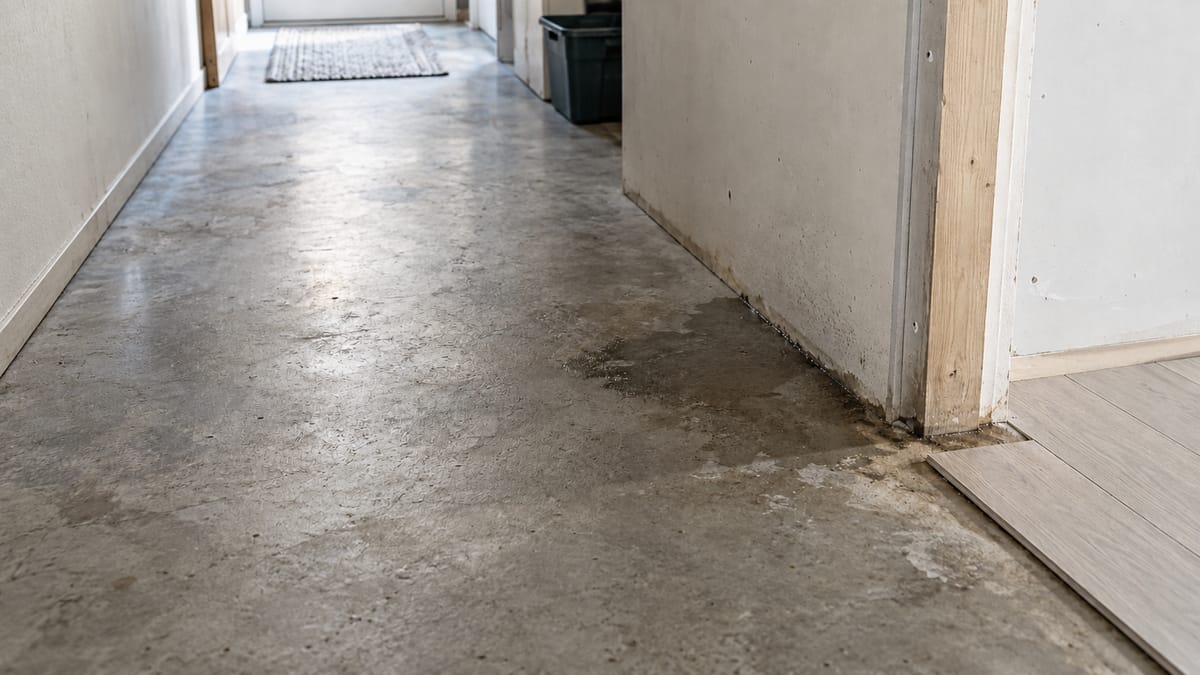
Connect the floor symptom to the system
Mark the affected area on a simple room sketch and record when it appeared. Describe whether the surface is damp, discolored or unexpectedly warm. Avoid lifting flooring or breaking concrete to search.
A floor symptom and unexplained water use are two separate observations. Ask how testing will determine whether they are related. Rainwater, a nearby fixture and moisture moving through the building can lead to different next steps.
Explain the floor before the visit
Tell us whether the affected area has tile, wood, carpet or exposed concrete. Mention known radiant floor heating, recent plumbing changes and any plans that show pipe routes. Do not assume that all buried lines carry the same kind of water.
A leak search must be suited to the actual line. A drain, domestic supply and closed heating loop should not be treated as interchangeable. Confirm the accepted system before agreeing to tests.
Ask how precise the result will be
A useful finding should explain the tested section, the evidence and any uncertainty in the indicated area. Ask whether the proposed work locates a pipe route, confirms water loss, narrows a search zone, or includes all of these.
An indication at the surface is not permission to cut. Discuss how buried services and the slab construction will be considered before any destructive access. Keep detection and an approved repair plan separate.
Compare access options after the findings
A localized opening and a different pipe route can affect different parts of the home. Ask for the basis of the proposed approach, the areas disturbed and the work excluded. There is no universal least-disruptive solution.
Concrete cutting, pipe repair, drying, floor replacement and any structural work need clear responsibility. A detection charge should not be mistaken for a complete restoration price. For insurance questions, preserve the findings and speak with your insurer about your own policy.
Questions before you book
Does a warm floor prove a hot-water leak?
No. Report the warm area and any known heating system, but ask what additional evidence connects it to a domestic water pipe. Temperature alone does not establish the cause.
Can an entire floor be ruled out from one reading?
Ask which section was tested and under what conditions. A limited result should not be represented as a guarantee that every concealed line is sound.
Reference notes
Local boundaries and technical guidance have limits. Check the address and the current requirements with the relevant authority.