Keep people away from uncertain water
If water is rising through a drain or may contain sewage, avoid contact and stop using affected fixtures until the problem is assessed. Keep children and pets away. Do not enter a flooded room or touch electrical equipment to collect more information.
From a safe position, note where the water first appeared and whether it followed a fixture discharge. Do not flush or run taps again merely to reproduce a backup.
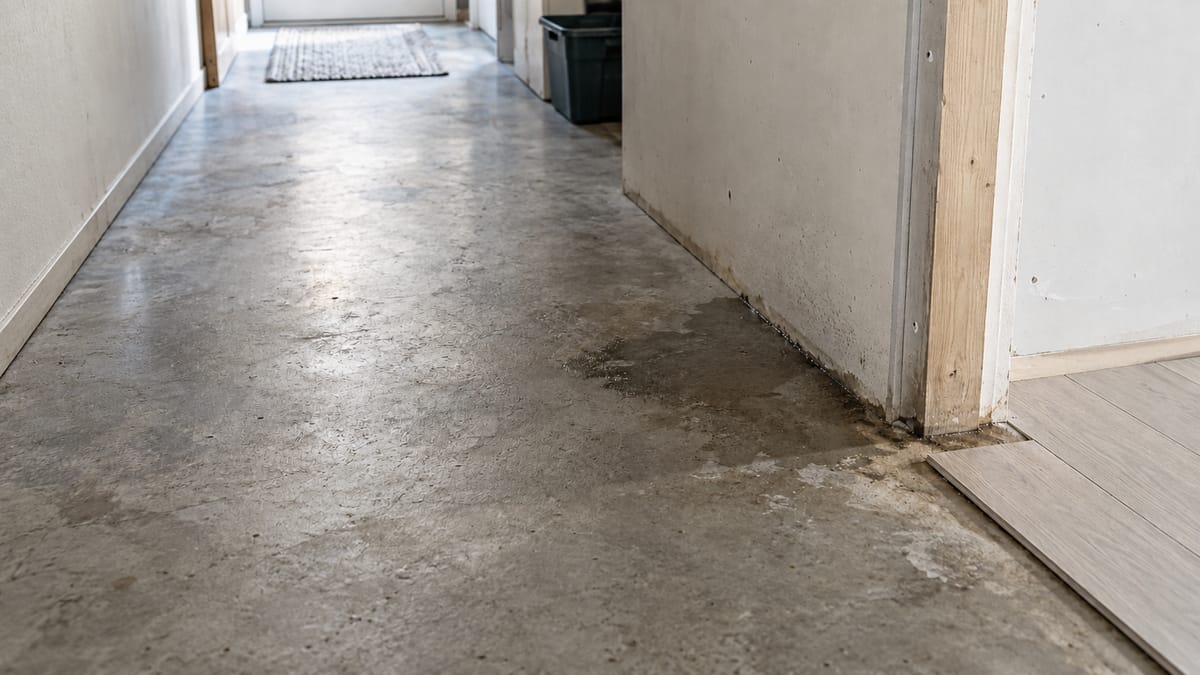
Name the system being investigated
A supply leak loses water from a pressurized pipe; a drain investigation asks a different question about wastewater movement. A concrete floor can be involved in either case. The word slab does not identify the system.
Platte Canyon can help its customers distinguish a mainline backup from a private service-line issue. Confirm the district at the actual address before applying that contact path. A fresh-water leak-location inquiry is not an agreement to clear a drain or clean contaminated material.
Ask why access belongs in that spot
A wet patch can be where water reaches the surface rather than where the failure began. Ask which pipe route, observation or test supports a proposed opening. A thermal camera cannot see through concrete to identify a broken fitting.
If the question remains whether water came from outside or plumbing, ask what investigation could separate those possibilities. Do not approve a pipe repair solely because the floor is damp.
Define the work after the source is known
Tell us the address and whether a drain, cleanout or fixture is involved. Confirm the type of inquiry that can be accepted. Before any work, distinguish source investigation, plumbing or drain repair, concrete access and drying or sanitation. Each needs the right authorization and a clear statement of what is included.
Reference notes
Local boundaries and technical guidance have limits. Check the address and the current requirements with the relevant authority.