Describe the surface without naming the cause
Identify the room, floor covering and approximate edge of the affected area. Note whether the floor is actually wet, only feels warm, or has a stain left from an earlier event. Existing photographs and the time the symptom was noticed are useful; deliberately running water to recreate damage is not.
A slab-leak inquiry concerns a suspected pipe beneath concrete. A basement, room name or ZIP code does not tell us where your supply pipes are installed.
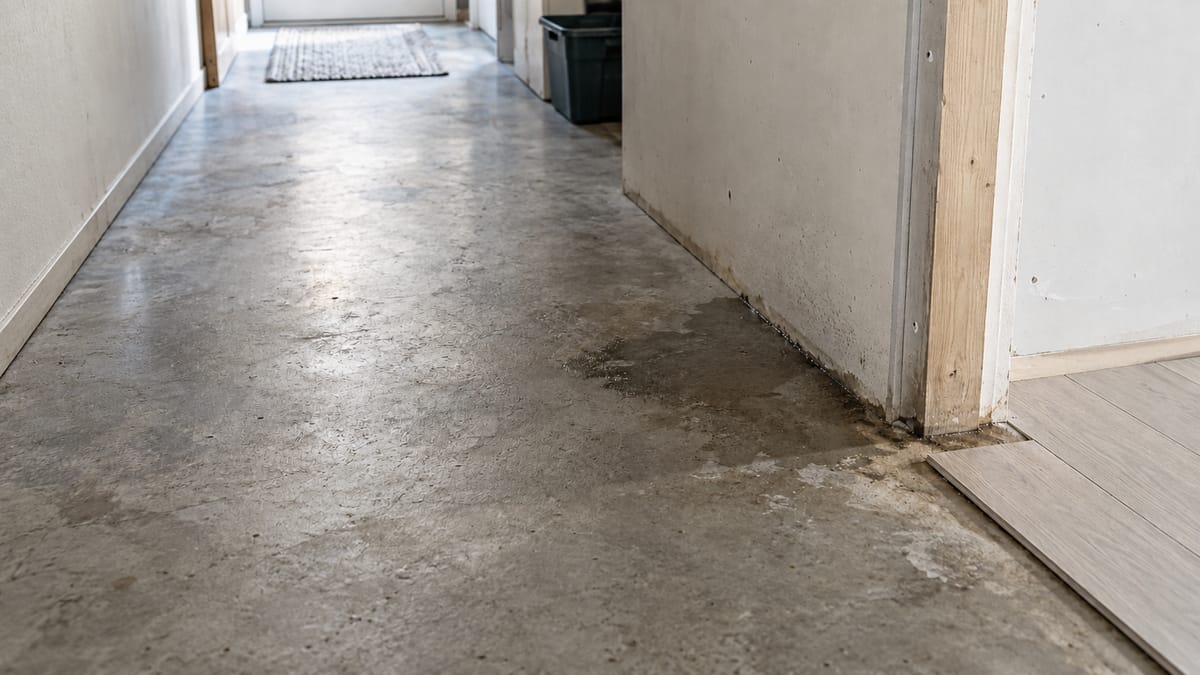
Treat pressure and temperature as clues
Highlands Ranch Water explains that low pressure may involve a regulator as well as a service-line problem. A pressure change therefore needs its own evaluation. Do not adjust the regulator to see whether a floor symptom disappears.
Thermal cameras read surface temperatures rather than seeing through concrete. Heating, sunlight and moisture can create different patterns. Ask how a suspected wet area would be confirmed and whether the pipe route is known.
Set the threshold for invasive access
Before any opening, ask for the evidence connecting a particular pipe segment to the problem. A useful explanation separates what was observed, what was tested and what remains uncertain. Ask whether existing accessible plumbing can answer the question before finishes are disturbed.
If concrete or flooring must be opened, agree on the size and location of access, affected furnishings and who restores each layer. Location work does not automatically include pipe repair or drying.
Prepare the floor history
Tell us about known floor heating, previous repairs and any plans showing plumbing routes. If water is near electricity or the floor is unsafe, stay out of that area. Call from a safe location with the address and observations; confirmation of the investigation and its limits comes before a repair decision.
Reference notes
Local boundaries and technical guidance have limits. Check the address and the current requirements with the relevant authority.