Keep the shutdown record
Note the date of the last irrigation work and what the invoice says was done. A controller switched off, a system drained and a system physically isolated are different descriptions. If you do not know the valve arrangement, report that uncertainty.
Do not restart a winterized system simply to see whether a wet area grows. Current watering restrictions and freeze conditions can limit a safe test; those constraints belong in the plan for the visit.
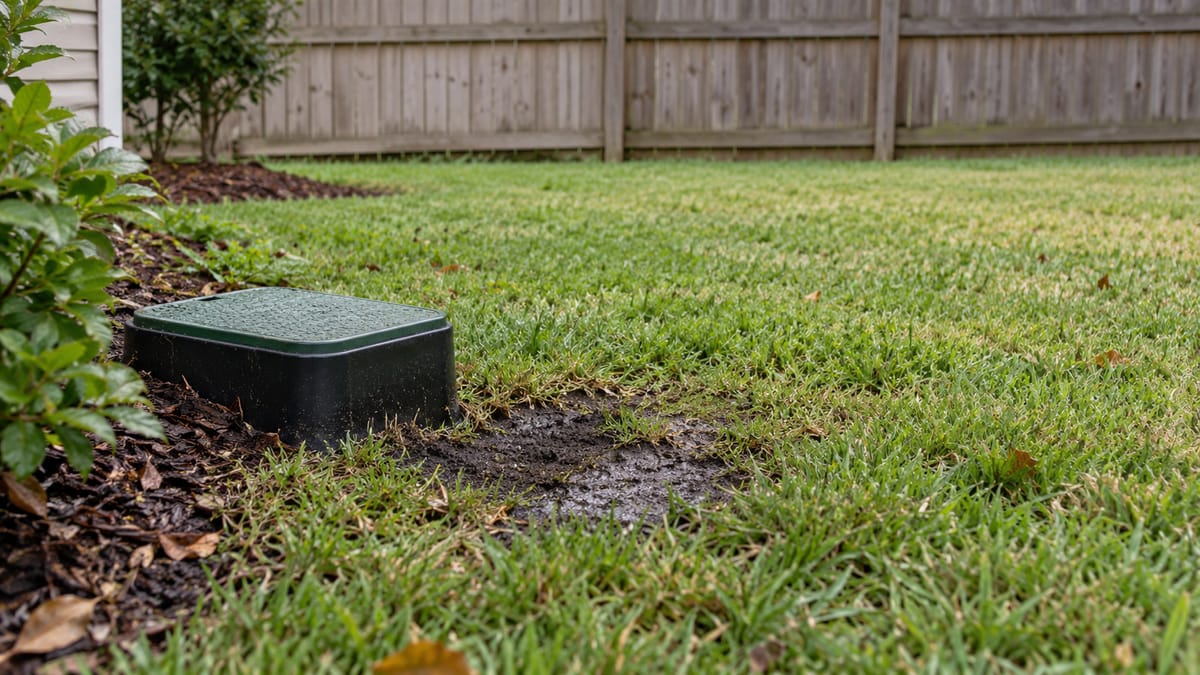
Describe the assembly that is wet
Say whether water is at a sprinkler head, an accessible above-ground fitting, a valve box or an unexplained patch of soil. Distinguish water actively flowing from material that has stayed damp. Rain or drainage can leave a box wet without establishing a pipe failure.
Take no covers apart around electrical controls and do not modify a backflow assembly. A photograph showing the whole location is often a better first record than a close-up that hides where it sits.
Identify the owner and available shutoff
A private yard and common landscaping may be controlled separately. For a shared system, involve whoever has authority over its valves and controller. Ken-Caryl district’s customer stop-box responsibilities should not be confused with permission for a visitor to operate it.
Tell us which known customer controls are accessible and which are locked, buried or unlabelled. Do not force a stiff valve to obtain a diagnostic result.
Ask for an inspection of the right portion
Confirm whether the inquiry concerns an exposed assembly, a zone valve or concealed irrigation pipe. Ask how the inactive system can be evaluated and what conditions are needed for any controlled test. Set separate permissions for repairs, locating private lines, digging and landscape replacement before proceeding.
Reference notes
Local boundaries and technical guidance have limits. Check the address and the current requirements with the relevant authority.