Compare periods that mean the same thing
Check the dates covered by the bill and when watering began. Record whether the controller gained another start time, a longer cycle or a new landscape zone. A comparison between a non-watering month and a watering month does not by itself measure leakage.
Keep any previous settings or maintenance notes. Do not reset the controller before recording them, and do not run prohibited test watering just to obtain a demonstration.
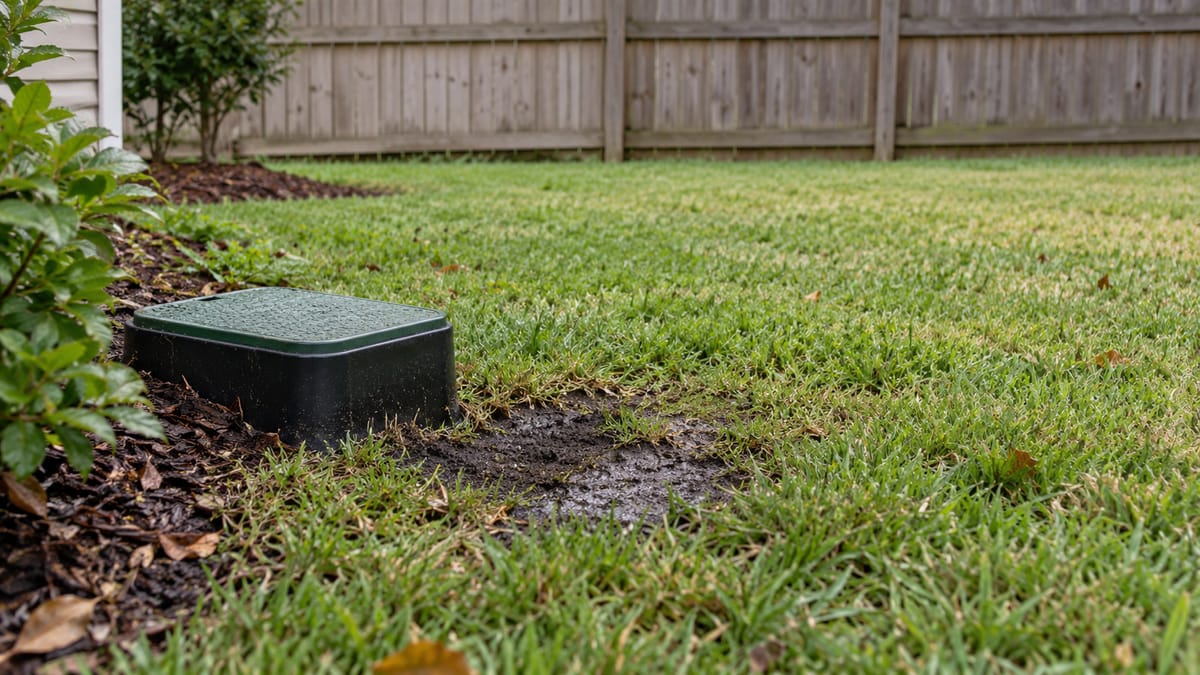
Look for a pattern beyond the total
Existing observations may show overspray on paving, water pooling during one zone or dampness that persists between cycles. Each points to a different question. Write down which pattern exists rather than labeling all excess use a broken underground pipe.
The EPA distinguishes scheduling and sprinkler-maintenance concerns. A distribution problem can waste water without requiring excavation; concealed piping may need investigation when visible causes do not explain the observations.
Do not overread a valve test
Platte Canyon specifically limits one of its inside-versus-underground checks to exterior-meter arrangements. If the meter or shutoff layout is different, the same conclusion may not follow. Do not force an unknown valve to repeat an online test.
A qualified assessment should explain what water path a reading includes. The irrigation branch, house shutoff and meter may not be in the order you assumed.
Decide between adjustment and investigation
Bring the controller history, bill dates and location of any persistent wet area to the call. Confirm the actual address and system scope. Ask whether the visit is intended to evaluate scheduling, a visible component or concealed loss, and which repairs or landscape work would need a separate agreement.
Reference notes
Local boundaries and technical guidance have limits. Check the address and the current requirements with the relevant authority.