Preserve the settings before changing them
Photograph the programmed days, start times and run times. Note a recent power interruption, seasonal adjustment or contractor visit if one occurred. Those records are more useful than guessing what the controller was doing before it was reset.
Respect current district watering restrictions. Do not start a test cycle during a ban or while water is causing damage; existing settings, prior observations and account records can be reviewed first.
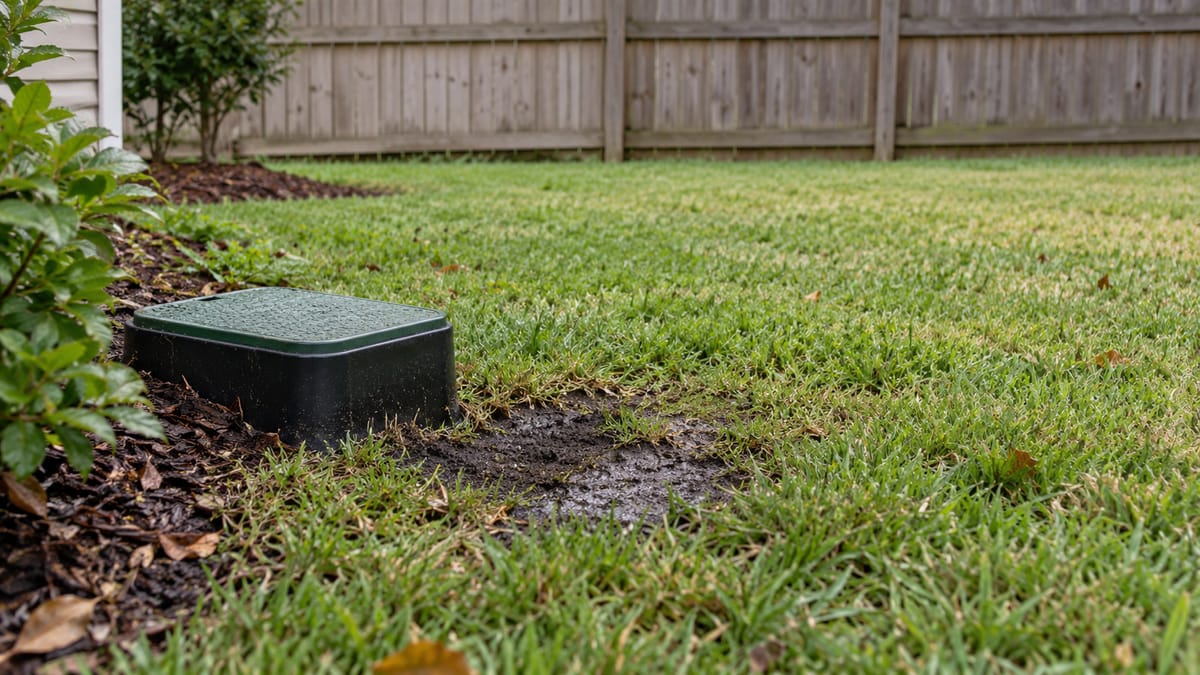
Describe the pattern in the yard
A wet patch that appears during one zone’s scheduled period raises a different question from water that keeps collecting between cycles. Note which heads or drip beds share that zone, if you already know. Avoid opening an electrical controller cabinet or dismantling a valve.
Highlands Ranch Water advises checking timer behavior and looking for zone or sprinkler faults when use is unexpectedly high. A low spray pattern alone still does not identify the failed component.
Include the seasonal history
Say whether the irrigation was recently started, shut down or winterized. Water near an exposed assembly needs a different access plan from a buried lateral. Do not alter a backflow device or attempt a compressed-air test to investigate.
If the system is shared or association-managed, its operator should be involved. A private house address does not establish authority over common irrigation valves or landscaping.
Define what the visit should answer
Call us with the address, controller history and whether the problem continues with scheduled watering off. Ask whether the investigation covers heads, valves, concealed piping or only a specified part of the system. Agree separately on any digging, private utility locating, repairs and landscape restoration.
Reference notes
Local boundaries and technical guidance have limits. Check the address and the current requirements with the relevant authority.