Describe the enclosure from outside
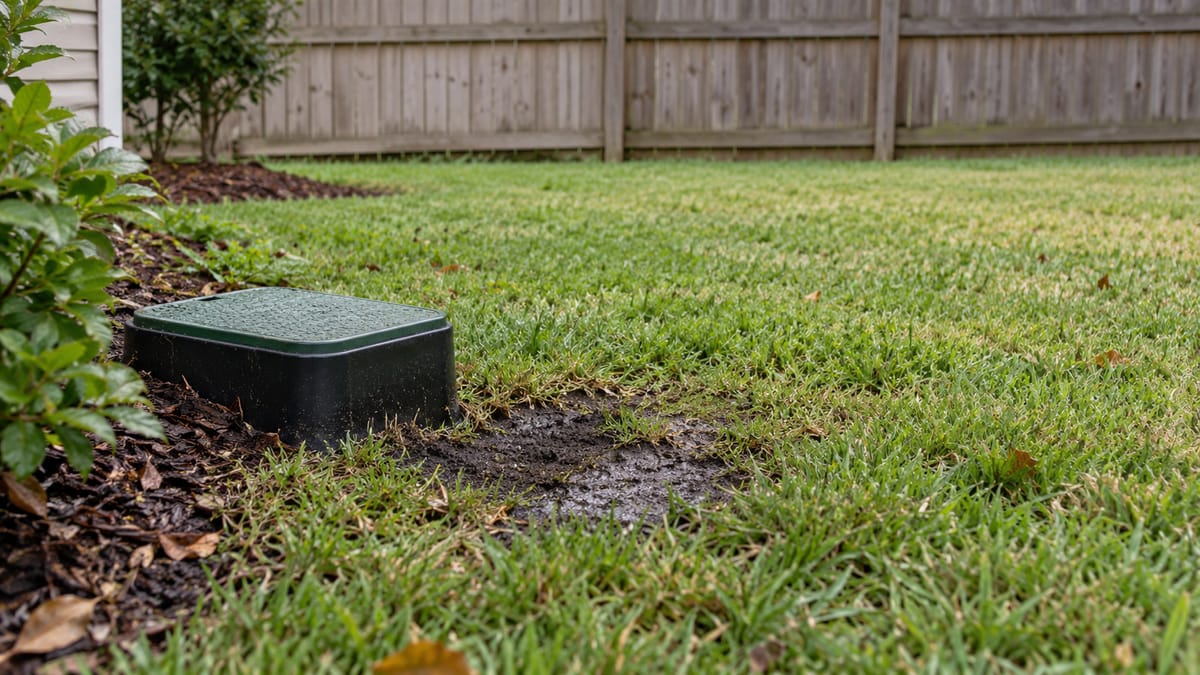
Record whether water is beside a lid, coming onto the street or spreading across the yard. Stay on stable ground. Do not open a deep pit, enter it or touch a meter fitting; the photograph should show the surroundings as well as the wet area.
Tell the utility if paving appears undermined or water is affecting public access. Avoid parking or placing equipment over a suspect void.
Identify who maintains the affected component
Platte Canyon’s guidance treats the meter pit and curb-stop assembly as specific customer responsibilities. Meter maintenance and the pipe connection can have different rules. Confirm the operator and component before assuming that every item inside a pit belongs to one party.
Where bills come from a partner municipality, use district information to find the pipe operator. Ask who needs to attend or approve access before arranging private work.
Make a plan for safe access
Explain whether a fence, planting bed, hard surface or locked gate obstructs the location. Preserve the visible position for the person assessing it. Clearing safe, loose belongings is different from excavating a buried cover or cutting roots.
If a private supply line needs investigation beyond the enclosure, ask how its route will be established. Existing utility markings and property plans help with planning, but they do not identify a leak by themselves.
Authorize the next step explicitly
Call us with the address, district and component described by the utility. Confirm whether the inquiry is meter-related, a private service pipe or still undetermined. Before excavation or replacement, agree on coordination, private locates, access limits and restoration. A short site visit should not leave those responsibilities assumed.
Reference notes
Local boundaries and technical guidance have limits. Check the address and the current requirements with the relevant authority.