Map the edge of the moisture from a safe place
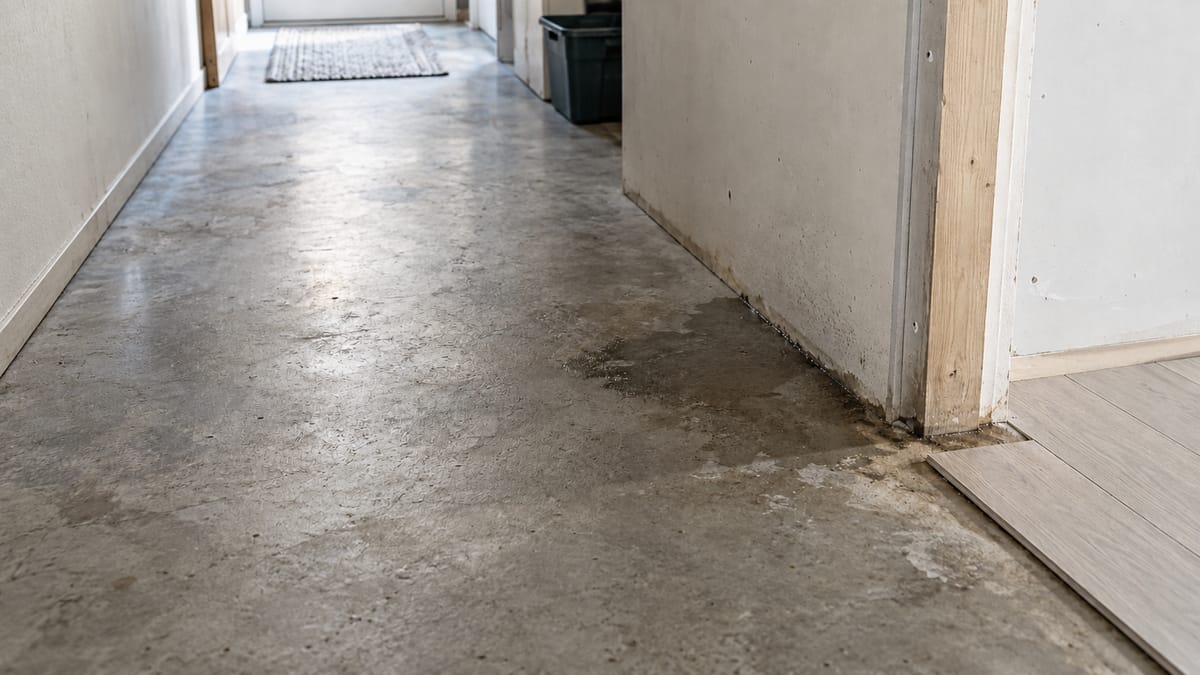
Note whether wetness is concentrated along an exterior wall, around a floor opening or in the middle of a room. Record the weather and the first time you noticed it. Avoid lifting heavy finishes or entering standing water to improve the photograph.
Describe whether the area is currently wet or only discolored. A finished floor can conceal the extent of moisture, so a small visible patch should not be used to declare the rest dry.
Keep alternatives open
EPA guidance recognizes outside entry, basement seepage and condensation as sources of indoor moisture. The timing of a storm or snowmelt can be useful, but timing alone does not prove a drainage fault. A separate plumbing leak can coexist.
Similarly, a water-use reading does not identify the floor as the source. Ask what evidence links the wet material to a particular supply or drain line and whether that line is actually beneath the concrete.
Ask for the scope that fits the evidence
If the evidence points to drainage or a building-envelope problem, that is a different brief from locating a pressurized pipe. Do not approve concrete removal merely because the room is a basement. Ask what question the opening would resolve.
Plumbing or structural changes may also need the correct building authority involved. Ken Caryl and nearby Littleton postal addresses cannot all be assigned to one permit office; check the parcel, particularly near city boundaries.
Keep drying separate from source confirmation
Prompt attention to wet materials matters, but a surface becoming dry does not establish that the source is fixed. Do not seal or cover an unresolved damp area. Call us with the address, weather timeline and flooring type, then confirm which part of the investigation is available and what would require a different scope.
Reference notes
Local boundaries and technical guidance have limits. Check the address and the current requirements with the relevant authority.