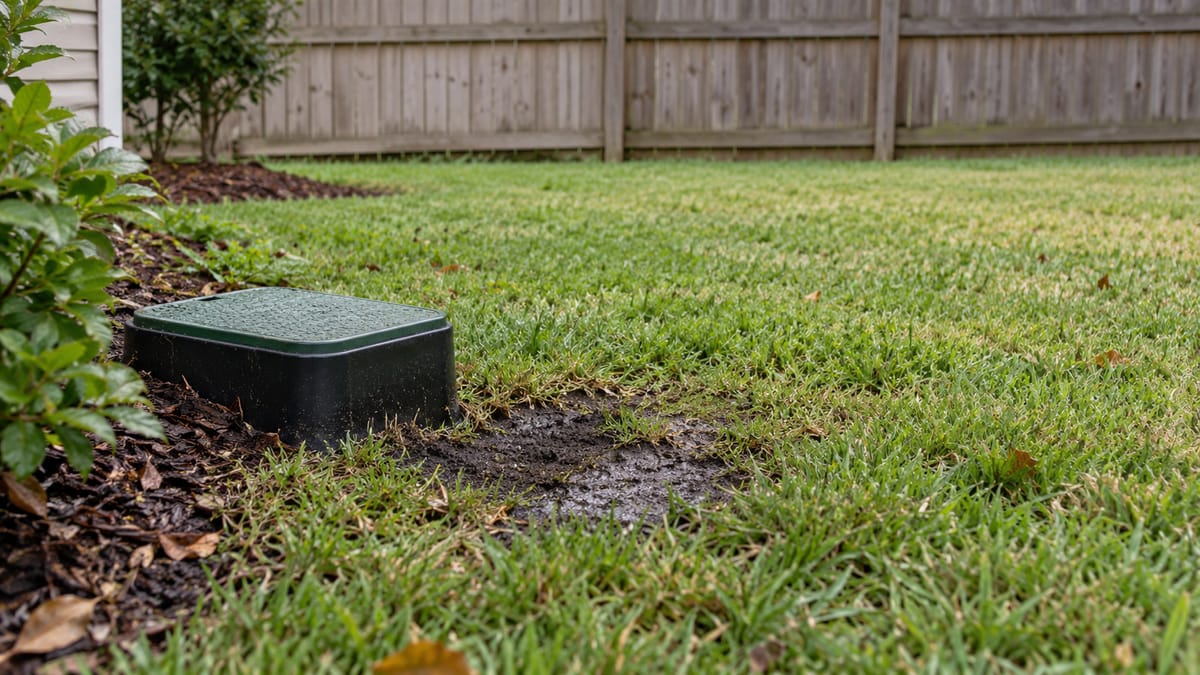
Record the zone and the timing
If the issue is already visible during a normal watering cycle, note the zone and the location. A tilted head, misting spray, runoff and water bubbling from the soil are different observations. Do not start extra cycles to test a flooded area.
Water seen between cycles deserves its own note. Record whether visible flow stops or continues, and whether the wet area grows. Timing helps explain the issue without claiming that a valve or buried pipe has already been diagnosed.
Separate a spray adjustment from a leak search
The EPA’s sprinkler guidance distinguishes inspection, connections, spray direction and scheduling. Water reaching pavement may involve aim or run time. A wet spot below ground may need a different investigation.
Record any recent controller changes or yard work. These facts can help define the work to assess; they do not establish who caused a fault or what equipment is damaged.
Leave valve assemblies and backflow devices alone
Photograph visible water from stable ground. Do not open a flooded electrical control box, dismantle a pressurized assembly or alter a backflow device. If the system can be paused using familiar normal controls without approaching a hazard, avoid adding more water.
Ask whether the proposed visit covers sprinkler lines, valves or only domestic plumbing. Backflow testing, winterization and landscape drainage are separate tasks and are not included by listing an irrigation leak inquiry here.
Define the boundaries of the yard work
Provide the address, controller location and any known plan of the zones. For common-area landscaping, identify the manager or association that controls the system before arranging access.
Ask how a suspected buried section will be checked, whether excavation needs a separate agreement and who reinstates the soil, turf or hard surface. If the source is outside the irrigation system, clarify the next appropriate contact before authorizing further work.
Questions before you book
Can a sprinkler fault increase indoor water use readings?
It depends on how the property is metered. Some systems share a domestic meter and others have a separate supply. Check the actual account and layout rather than assuming.
Does this include a pool or pond leak?
No. Pools, spas and ponds involve a different scope. Confirm a specialist for that system; these pages address household water-line and irrigation inquiries.
Reference notes
Local boundaries and technical guidance have limits. Check the address and the current requirements with the relevant authority.