Name the retailer before arranging a shutoff
Use the water account, not a map label, to identify the service. Dominion supplies Sterling Ranch CAB at wholesale level; residential service questions belong with the retailer. A Roxborough district customer has a different contact path.
Do not operate a street-side valve because it is close to your property. Tell the utility where water is appearing and whether the street, a public verge or neighboring parcels are involved.
Build a route history from records
Look for an existing service plan, meter location, prior repair invoice or landscape drawing. Tell the investigator which information is documented and which is only remembered. A line on a drawing may help plan access, but it does not prove present condition or the position of a leak.
If there are separate indoor and outdoor meters, identify both. Ask which pipe section the proposed test covers and which sections remain outside it. A result should not be generalized to untested branches.
Leave ground disturbance to an agreed plan
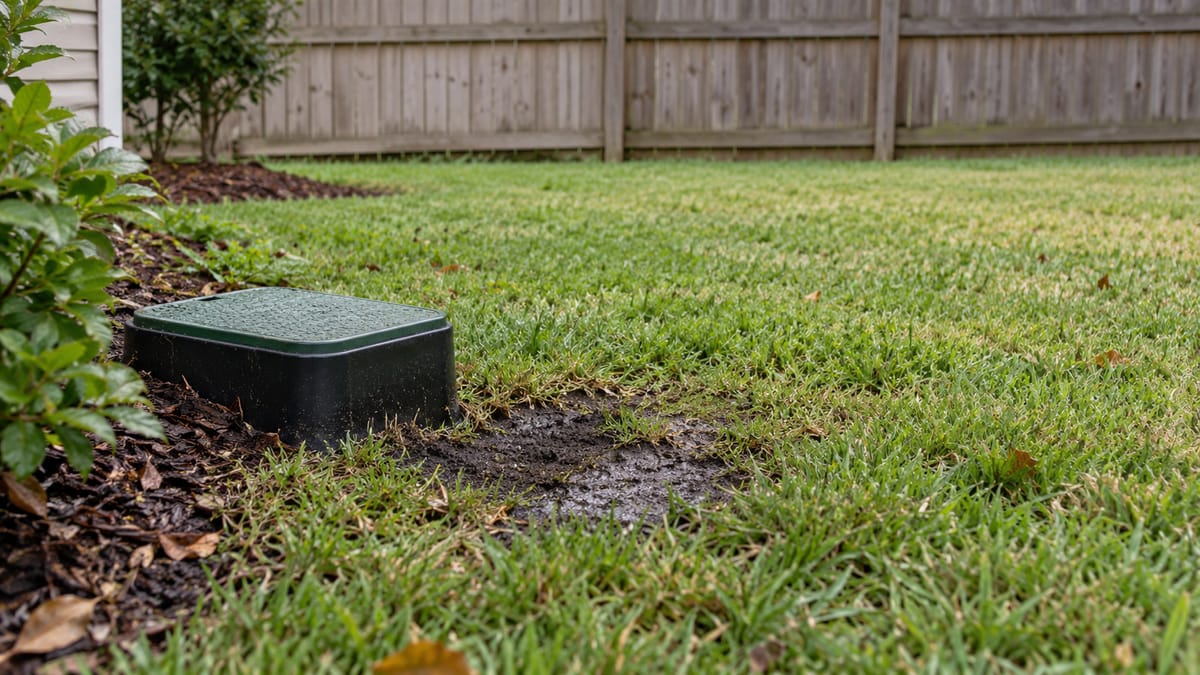
A saturated patch can extend beyond its source. Stay on firm ground and avoid digging exploratory holes. Private service pipes and irrigation may need locating in addition to the ordinary 811 request.
Ask who will obtain permissions where a route crosses shared land, paving or an easement. Utility coordination and a physical leak investigation are distinct tasks, and neither substitutes for permission to excavate.
Make repair scope reviewable
Call us with the address, retailer and accessible route records. Before authorizing repair, ask for the suspected section, confidence limits and proposed access. Confirm how utility shutoff, pipe repair, excavation and surface restoration will be handled. A postal-area page is not confirmation that every address or excavation is accepted.
Reference notes
Local boundaries and technical guidance have limits. Check the address and the current requirements with the relevant authority.